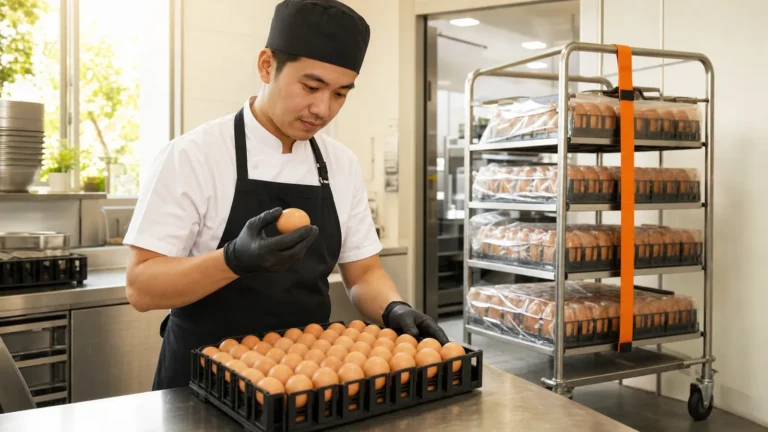
Storing fresh eggs properly in a Singapore kitchen matters when service is fast, storage is limited and every ingredient must be ready when the kitchen needs it. Heat, humidity and frequent door opening make clear handling rules especially valuable. A dependable routine reduces avoidable breakage, makes stock easier to count and helps the team use older trays before newer deliveries.
This practical guide is written for Singapore restaurants, cafés, bakeries, caterers and hawker operators. Use it alongside your own food-safety plan, supplier instructions and Singapore Food Agency guidance. The aim is a repeatable process that staff can follow during receiving, preparation and closing checks.
Quick checklist
- Check eggs as soon as they arrive
- Keep shells clean, dry and uncracked
- Move deliveries into storage promptly
- Use a stable refrigerator location
- Keep eggs in protective trays
- Label every delivery clearly
- Rotate stock using FIFO
- Separate eggs used for special preparations
- Review stock at closing time
1. Check eggs as soon as they arrive
Compare the delivered quantity with the order and inspect trays before accepting them into working stock. Look for cracked shells, leakage, strong odours, wet packaging or signs that cartons were crushed in transit.
Problems found at the door are the supplier’s to resolve; problems found two days later become the kitchen’s. Record unusual findings immediately instead of relying on memory at the end of a shift.
2. Keep shells clean, dry and uncracked
Clean, intact shells are the first visible quality check. Separate damaged eggs from usable stock and follow your kitchen procedure for disposal and discrepancy reporting.
Avoid washing eggs before storage: moisture on the shell makes it easier for bacteria to pass through. Deal with soiled shells at the point of use instead.
3. Move deliveries into storage promptly
Do not leave trays in a loading area while other tasks take priority. Assign one team member to complete receiving and move accepted stock to its designated storage location.
Eggs lose quality faster at room temperature than under refrigeration, so in Singapore’s heat every hour beside the loading door costs freshness that proper storage would have kept.
4. Use a stable refrigerator location
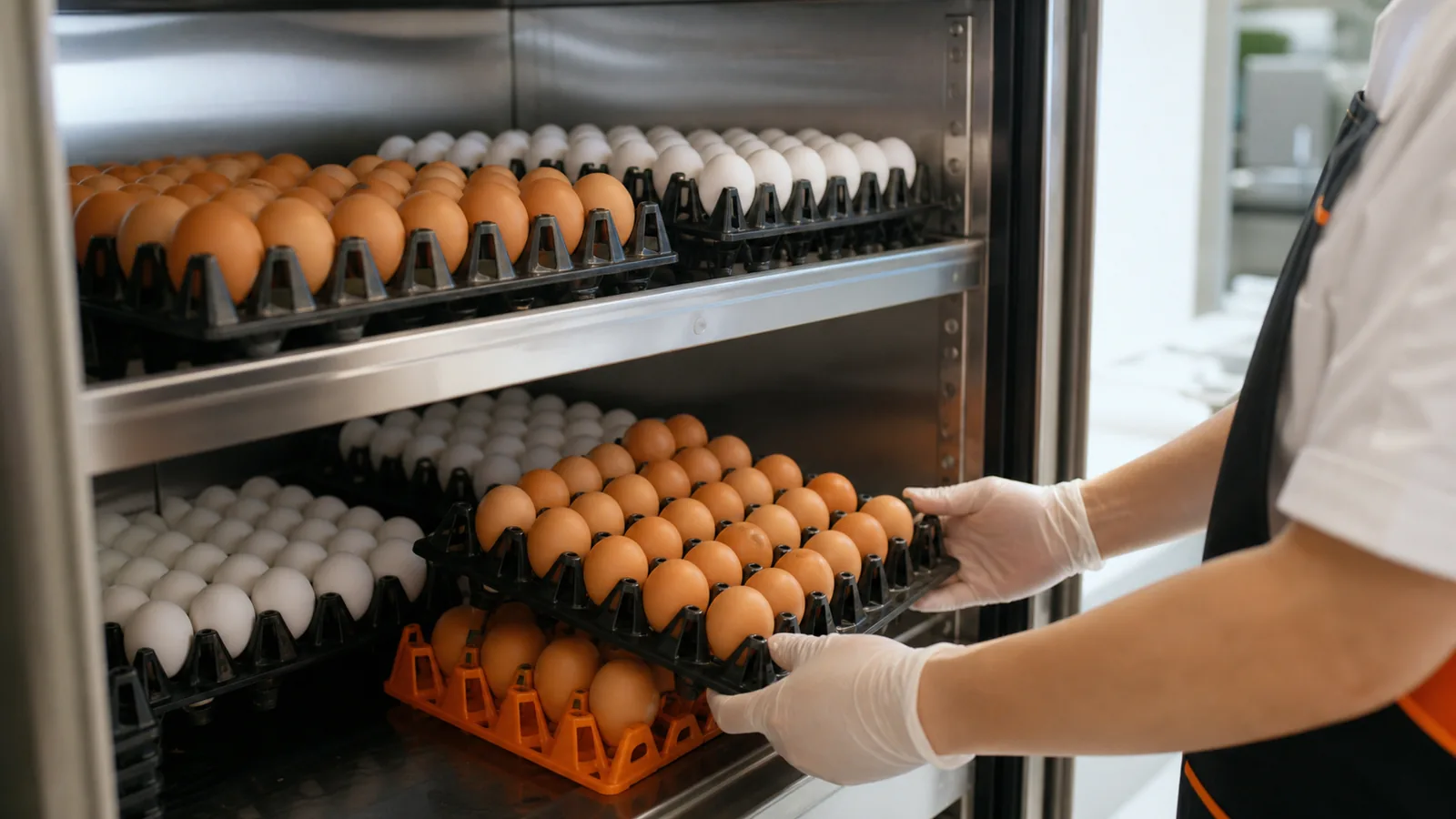
Store eggs where temperature and handling conditions remain consistent, away from doors, drips, raw-meat leakage and strong-smelling ingredients. Follow label and supplier storage directions.
A consistent spot also makes temperature checks and stock counts faster, because staff always know where every tray should be.
5. Keep eggs in protective trays
Trays reduce rolling, impact and unnecessary handling. Avoid stacking beyond what the packaging can safely support, and never place heavy ingredients on top.
Keeping eggs blunt end up in the tray also helps the air cell stay stable and the yolk centred while stock waits its turn.
6. Label every delivery clearly
Mark the received date or use-by information in a format that every shift understands. Labels should remain visible after trays are placed on shelves.
A tray that cannot be dated at a glance will eventually be used out of order, no matter how careful the team is.
7. Rotate stock using FIFO
First in, first out means older suitable stock is positioned for use before newer stock. Check rotation when putting away every delivery, not only during stocktake.
Place new trays behind or below older ones so the correct choice is also the easiest one to reach during a rush.
8. Separate eggs used for special preparations
If the kitchen assigns certain eggs to baking, breakfast service or fully cooked recipes, use clear shelf zones or labels so staff do not mix allocations during a rush.
Physical separation prevents a rush-hour substitution from quietly changing a recipe’s cost or consistency.
9. Review stock at closing time
A short closing count reveals cracked eggs, unexpected usage and poor rotation before the next service. Use the result to adjust preparation and the next order.
The count takes minutes when shelves are tidy and labelled, and it gives the next morning’s order real evidence to stand on.


Make the routine work across every shift
Storage rules only protect quality when every shift follows the same sequence. Include the checklist in induction training, demonstrate how to inspect trays and show staff exactly where dated stock belongs. Keep labels, markers and receiving records beside the storage area. Managers should review exceptions during handover, especially after a busy weekend, catering order or menu promotion. When the team notices repeated breakage, unclear labels or shelves being rearranged, correct the layout and update the written procedure. A visible, shared standard is easier to follow than instructions passed verbally from one person to another, and it gives new employees a dependable reference from their first service.
Frequently asked questions
How often should the routine be reviewed?
Review it whenever deliveries, menu demand, storage layout or staffing changes. A short monthly check is also useful for spotting repeated waste or receiving problems.
What should staff record?
Keep only useful details: delivery date, quantity, visible damage, stock moved into storage and any discrepancy reported to the supplier. Documentation also helps managers compare actual usage with forecasts and make calmer, evidence-based ordering decisions before the next delivery arrives.
Build a dependable egg routine
A strong storage routine protects quality by making the correct action obvious at every hand-off. Start with the checklist above, train every person who receives or uses eggs and improve the process with real kitchen data. For help planning recurring egg supply, contact Hup Seng Fresh Eggs Supplier. You can also read more about our local service on the About page and consult the Singapore Food Agency’s food-safety guidance.