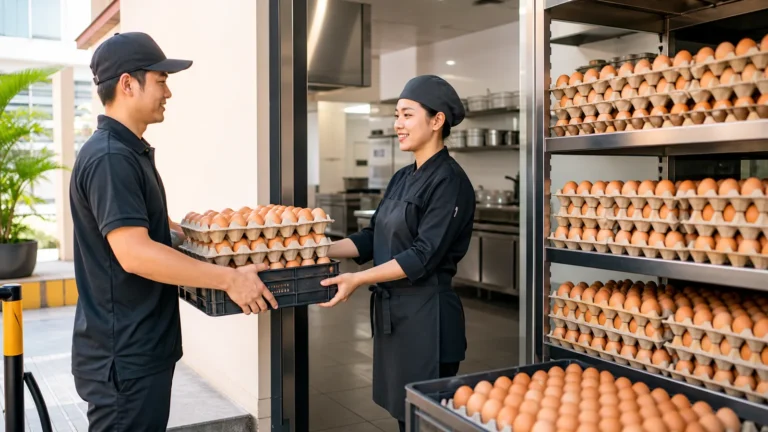
A weekly egg order for a restaurant is easier to manage when the kitchen uses a written process instead of estimates made during a busy shift. Good ordering starts with portions, not guesswork. A consistent method improves ordering accuracy, receiving decisions and communication between service, kitchen and purchasing teams. Reliable figures also make supplier conversations faster and give managers a clearer basis for controlling waste and purchasing costs.
This guide is designed for Singapore restaurants, cafés, bakeries, caterers and hawker operators. Adapt it to your menu, premises and food-safety plan, and follow supplier directions and Singapore Food Agency guidance.
Quick checklist
- Start with menu usage
- Measure normal weekly sales
- Account for day-by-day demand
- Convert demand into trays
- Add a controlled buffer
- Check storage capacity
- Review actual usage weekly
1. Start with menu usage
List every dish, bake and preparation that uses eggs, then record the number of eggs required for one sellable portion or production batch. Include staff meals, recipe testing and egg washes or glazes that never appear on the menu, because they still draw from the same trays.
The finished list becomes the reference point for every calculation that follows, so keep it where the head chef and the purchasing team can both update it whenever recipes or portion sizes change.
2. Measure normal weekly sales
Use recent point-of-sale figures and kitchen production sheets to calculate a realistic baseline for each service day. Work from at least four typical weeks so one unusually quiet or busy period does not distort the average.
Multiply the expected sales of each egg dish by the eggs per portion recorded in step 1. This translates sales history into egg demand and shows which menu items actually drive the order.
3. Account for day-by-day demand
Breakfast, weekend brunch, catering orders and public holidays can change consumption sharply, so separate steady days from peaks. Build the weekly total from daily estimates rather than a single flat figure.
Note recurring patterns such as weekend spikes or a quiet Monday, and flag one-off events like festive promotions separately so they do not inflate the everyday baseline.
4. Convert demand into trays
Add the eggs required across every menu item, then convert the total into the tray or carton format supplied to your business. Most suppliers deliver 30-egg trays, so round up to whole trays and note how much the rounding adds to the order.
Keep the conversion visible in the ordering record so it is easy to re-run when pack formats, egg sizes or portion counts change.
5. Add a controlled buffer
A modest buffer covers normal forecasting error and occasional breakage without turning the storeroom into excess stock. Many kitchens start at roughly five to ten per cent above forecast demand and adjust from experience.
Record the buffer as its own line in the calculation. When the order is reviewed, it should be obvious how much of the quantity is insurance rather than expected use.
6. Check storage capacity
The calculated quantity must fit safely in the designated storage area without overcrowding or unstable stacking. Count usable shelf space in trays, not in eggs, and leave room for rotation so older stock stays accessible in front of the new delivery.
If the order no longer fits, split the week into two deliveries rather than stacking higher than the packaging can safely support.
7. Review actual usage weekly
Compare ordered, used, damaged and remaining quantities, then adjust the next forecast using evidence from the kitchen. A five-minute count at the same time each week is enough to reveal drift between the plan and reality.
Adjust one variable at a time, whether that is the buffer, the baseline or a peak-day allowance, so the effect of each change is clear by the next review.



Turn the weekly calculation into a repeatable ordering rhythm
Once the first forecast is complete, translate it into a simple order calendar. Mark the cut-off time for each order, the expected delivery window and the person responsible for confirmation. Keep the latest supplier contact details beside the ordering record. If a public holiday, private event or promotion is likely to change demand, flag it before the normal cut-off instead of waiting for stock to run low. A shared calendar gives the kitchen and purchasing team one version of the plan and reduces duplicate or forgotten orders.
Track three figures after every delivery cycle: eggs ordered, eggs used and usable stock remaining before the next delivery. Record breakage separately so it does not look like normal menu consumption. After four weeks, compare the forecast with actual use by day and menu category. Consistent over-ordering may indicate an inflated buffer, while frequent emergency top-ups can reveal missed menu usage or unrealistic sales assumptions. Adjust one variable at a time, then observe the next cycle before making another change.
Cost control should not come at the expense of operational resilience. The cheapest theoretical quantity can become expensive if a kitchen repeatedly runs short during a busy service. Equally, a very large buffer ties up storage space and increases the risk of poor rotation. Aim for a practical range that supports normal variation, then define who may approve an exceptional top-up. This keeps the weekly order both disciplined and flexible.
Frequently asked questions
How often should the ordering forecast be reviewed?
Review it monthly and whenever sales patterns, menu items, storage space, supplier arrangements or staffing change. Use actual kitchen records rather than memory.
Who should own the weekly order?
Choose a role that sees both ordering and receiving information, then train a backup so the routine continues during leave or shift changes.
Put the checklist into practice
A reliable weekly ordering routine turns day-to-day observations into better purchasing decisions. Start with the steps above, keep the records simple and improve the forecast using real usage and receiving data. For recurring egg supply, contact Hup Seng Fresh Eggs Supplier, learn about our local service on the About page, and consult the Singapore Food Agency’s food-safety guidance.